.webp)
By the time you reach your 30s, you have lived enough life to know what you do not want. You have likely dated different personalities, experienced disappointment, maybe even ended something you once thought would last. And yet, the advice floating around still sounds like it was written for college students.
Wait three days to text. Do not show too much interest. Keep them guessing. Do not talk about commitment too soon.
That kind of dating advice feels out of sync with where you are now.
Dating after 30 is different. You are balancing work, friendships, maybe family expectations. You value your time. You know the cost of staying in something that drains you. At the same time, there can be a quiet pressure building in the background. Friends are pairing off. Conversations shift toward long term plans. The noise around timelines gets louder.
Once you reach your 30s, the way you approach relationships shifts in subtle but important ways. You are evaluating emotional availability, stability, shared values, and long term alignment. You want connection, but you also want peace. You want depth, not games.
So when old dating rules tell you to pretend, perform, or play small, something in you resists. And it should.
This guide breaks down what truly shifts after 30, why certain patterns start to feel exhausting, and how to date with clarity instead of confusion.
What Makes Dating After 30 Different And Why That Is Actually Good
Dating after 30 comes with more clarity, more self knowledge, and often more boundaries. You have likely experienced enough to recognize patterns. You know how it feels to ignore red flags. You understand the cost of staying in something that drains you. That awareness changes how you show up.
There is also more context. Careers are established or evolving. Friendships are deeper. Time feels more valuable. That can create a sense of dating pressure after 30, especially when conversations around long term plans grow louder. Yet that same pressure can sharpen your focus. You are less interested in casual confusion and more interested in emotional stability.
Here is what shifts in a healthy way:
- You value emotional maturity over charm.
- You notice compatibility beyond physical attraction.
- You recognize your attachment patterns faster.
- You set boundaries sooner instead of hoping things will change.
- You care more about peace than intensity.
- You prefer direct communication over guessing games.
- You see the difference between chemistry and consistency.
The good news is that this stage allows for more honest connection. You are not dating to prove something. You are dating to build something.

Why 'Play Hard to Get' and Other Rules Backfire After 30
A lot of traditional dating rules were built around mystery, scarcity, and emotional withholding. They were designed to create intrigue. They were never designed to build stability. Strategies like playing hard to get might generate short-term attention, yet they often create confusion instead of clarity.
By your 30s, most people are not looking for puzzles. They are looking for partnership. Delayed replies, mixed signals, and strategic indifference tend to signal emotional unavailability rather than confidence. Instead of building attraction, these behaviors can trigger insecurity or reinforce unhealthy attachment patterns.
Here is why those old rules fall flat:
- Emotional Withholding Feels Immature: Deliberate distance often reads as avoidance rather than independence.
- Mixed Signals Create Anxiety: Inconsistent communication activates insecurity instead of trust.
- Artificial Scarcity Breeds Distrust: Manipulating availability weakens authenticity in early stages.
- Games Undermine Compatibility Assessment: Performance hides real personality and core values.
- Delayed Honesty Wastes Time: Avoiding direct conversations postpones clarity about intentions.
- Mystery Blocks Emotional Safety: Genuine connection requires openness, not calculated silence.
- Strategic Detachment Confuses Attachment Styles: It can intensify anxious patterns instead of supporting secure bonding.
Healthy connection after 30 is built on transparency and steadiness. Confidence shows up as consistency, not manipulation.
Read Next: Relationship Tips from a CBT Practitioner: How to Stop the Same Fight from Repeating
The Pressure to Have It All Figured Out by 30
By the time you enter your 30s, there is often an unspoken timeline hanging in the air. Friends are getting engaged. Family members start asking careful questions. Social media feeds are full of weddings and baby announcements. Even when no one says it directly, the message can feel clear. You should know what you want. You should be close to settling down. You should have your life mapped out.
This is where marriage pressure and the pressure to settle down can quietly distort dating decisions.
Instead of asking, "Is this person right for me?" the question becomes, "Is this good enough to move forward with?" That shift is subtle, yet powerful. It can push people to overlook misalignment simply because time feels limited. It can also create panic when relationships do not progress quickly.
Dating pressure after 30 often shows up in these ways:
- You overanalyze timelines instead of evaluating compatibility.
- You feel urgency after only a few promising dates.
- You compare your progress to friends constantly.
- You tolerate red flags because you fear starting over.
- You rush emotional intimacy to create a sense of certainty.
- You feel discouraged when dates do not lead somewhere quickly.
- You question your self-worth based on relationship status.
The truth is that clarity rarely comes from pressure. It comes from alignment. Feeling behind does not mean you are failing. It often means you are being forced to define what truly matters to you rather than following someone else’s clock.
Attachment Styles in Dating After 30
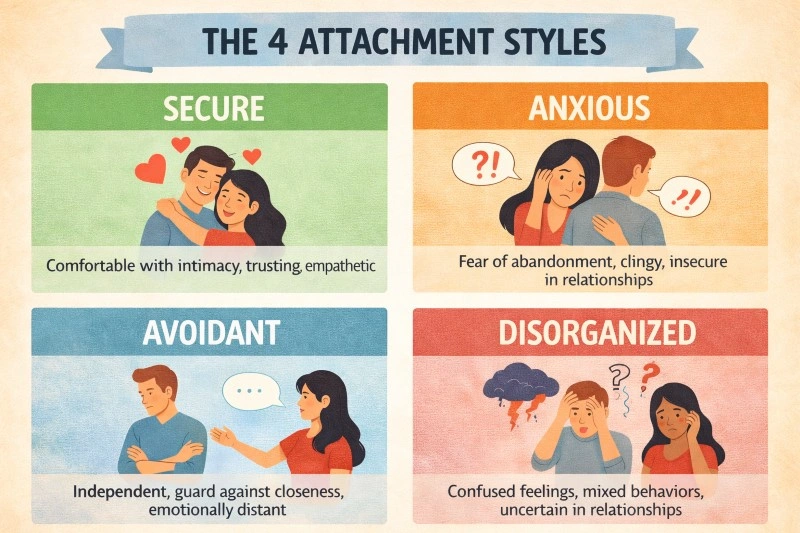
By your 30s, dating is rarely just about attraction. It is also about patterns. The way you respond to closeness, conflict, distance, and reassurance often reflects your attachment history. Understanding attachment styles in dating gives you language for dynamics that once felt confusing or personal.
Secure Attachment
Secure attachment shows up as steadiness. You can express interest without panic. You can tolerate space without assuming rejection. Conflict feels uncomfortable, yet manageable. You communicate needs directly and listen without becoming defensive. After 30, secure attachment looks like consistency, emotional availability, and clear boundaries.
People with secure patterns often:
- Address misunderstandings early.
- Express interest openly without games.
- Stay grounded during minor disagreements.
- Choose partners who are emotionally responsive.
Secure attachments leads to emotionally balanced connections grounded in open communication and proactive conflict resolution.
Anxious Attachment
Anxious attachment in dating often feels intense. You may crave reassurance and feel unsettled when communication shifts. Small delays in texting can trigger overthinking. You may invest quickly, fearing that distance signals abandonment. This pattern is not weakness. It is a learned response shaped by earlier experiences.
Common signs include:
- Seeking constant reassurance about interest.
- Interpreting neutral behavior as rejection.
- Overanalyzing messages and tone.
- Feeling emotionally flooded during conflict.
Awareness helps reduce reactivity and build more secure responses.
Avoidant Attachment
Avoidant attachment tends to value independence heavily. Closeness can feel overwhelming. You may withdraw when emotions deepen or minimize the importance of commitment. Intensity feels suffocating rather than exciting. In dating after 30, this can show up as strong chemistry followed by distance once things become serious.
You might notice:
- Pulling back when someone gets emotionally close.
- Preferring casual dynamics over vulnerability.
- Struggling to express needs openly.
- Feeling relief when relationships end, even if you cared.
Understanding this pattern creates space for change. When you identify the urge to withdraw, you can choose openness in small, manageable steps instead of defaulting to distance.
Read Next: The Connection Between Thoughts, Mood & Behavior: How CBT Rewires Depressive Patterns
Disorganized (Fearful-Avoidant) Attachment
Fearful-avoidant attachment can feel internally contradictory. There is a strong desire for closeness, yet vulnerability also feels threatening. You may crave reassurance and emotional depth, then suddenly feel exposed once things become stable. This push-and pull-creates intensity at the start and confusion soon after, especially when you genuinely want a lasting connection but struggle to trust it.
You might notice:
- Moving quickly toward intimacy and then retreating.
- Feeling uneasy when someone shows consistent affection.
- Testing a partner’s interest instead of expressing fear directly.
- Ending relationships abruptly once vulnerability increases.
This pattern often develops when early relationships felt unpredictable or unsafe. Recognizing it brings clarity which helps with emotional healing. Instead of judging yourself, you can start building steadiness and trust gradually, with partners who respond consistently rather than reactively.
Red Flags vs Normal Imperfections
By your 30s, it becomes easier to spot patterns. What is harder is knowing the difference between a serious pattern of dating red flags and a normal human flaw. No one is perfect. Everyone carries habits, blind spots, and stress responses. The goal is not to screen for perfection. The goal is to identify behavior that signals emotional safety versus behavior that signals instability.
Here is a grounded way to separate patterns that require caution from traits that simply reflect normal imperfection:
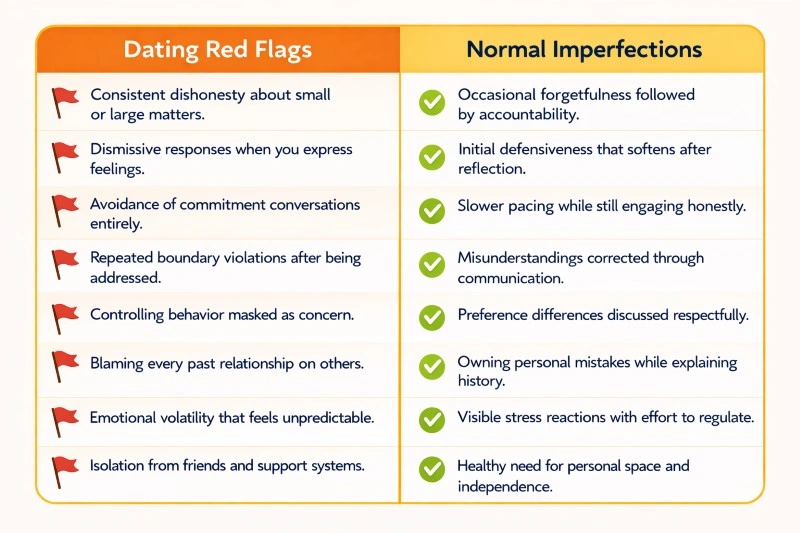
Notice that healthy dynamics often include accountability. When something goes wrong, the person reflects, adjusts, and communicates. In contrast, consistent patterns of dismissal, dishonesty, or manipulation rarely improve without significant self work.
Looking for green flags in relationships can be just as important. Emotional consistency, openness to feedback, and respect for boundaries are strong indicators of long term stability.
Honest Communication on Apps and First Dates
By your 30s, clarity becomes more attractive than mystery. Most people are no longer interested in endless texting that goes nowhere. They want direction, transparency, and emotional presence. Strong communication reduces confusion early and sets the tone for the connection that follows.
When it comes to dating app tips, honesty works better than performance. Instead of curating an image that feels impressive, focus on being specific about what you value and what you are looking for. Vague profiles attract vague interactions. Clear intentions attract aligned ones.
Here are practical ways to communicate well early on:
- Be direct about your relationship goals without oversharing.
- Ask thoughtful first date questions that reveal values and priorities.
- Share interests and lifestyle preferences honestly rather than trying to impress.
- Notice how someone responds to boundaries and clarity.
- Pay attention to consistency between words and actions.
- Avoid interrogating. Aim for curiosity and balance.
- Express interest clearly instead of relying on subtle signals.
- Follow up respectfully if you want to see them again.
Clear communication filters faster. It saves time and emotional energy.
How to Heal Old Patterns So You Do Not Repeat Old Relationships
Many people say they want something different, yet find themselves in familiar dynamics. The faces change. The emotional experience does not. Staying stuck in such a manner leads to emotional fatigue. Recognizing this pattern is the first step to change. The work begins internally, not externally.
To break unhealthy relationship patterns, you need to examine what feels familiar. Sometimes familiarity feels like chemistry. Intensity can be mistaken for compatibility. When you slow down and reflect, patterns become clearer.
Some questions that support growth are:
- "What traits do my past partners have in common?"
- "How did I feel most of the time in those relationships?"
- "What did I tolerate that I would not accept today?"
- "When did I ignore my intuition?"
- "What emotional triggers showed up repeatedly?"
- "Did I communicate needs clearly or hope they would be noticed?"
- "Was I attracted to potential more than reality?"
- "What does stability feel like to me?"
This reflection reduces the likelihood of repeating the same story. It strengthens discernment and builds confidence in your own judgment. Growth in dating often begins with ownership, not blame.
Read Next: How to Know If You Need a Life Coach (And What to Expect)

When to Take a Break From Dating Without Giving Up
Sometimes the healthiest move is to pause. Not because you failed. Not because you are giving up. A pause can create clarity when dating starts to feel draining instead of intentional. Many people experience burnout from dating without realizing it. Swiping, small talk, emotional investment, and disappointment add up over time.
A break becomes necessary when you notice patterns like these:
- You feel emotionally numb before dates even begin.
- You agree to plans out of obligation rather than interest.
- You are comparing every new person to someone from your past.
- You feel cynical or irritated during conversations.
- You are tolerating misalignment just to avoid being alone.
- You feel anxious after every interaction instead of grounded.
- You are seeking external validation more than connection.
- You cannot identify what you genuinely want anymore.
A pause is not withdrawal. It is recalibration. It allows you to reconnect with your values, rebuild emotional steadiness, and reflect on patterns without the noise of constant interaction. When you return, you date with intention instead of urgency.
On the flip side, it’s also true that dating before you feel completely ready can serve a purpose. Sometimes showing up — even with nerves, even with uncertainty — becomes a form of gentle exposure therapy. It helps you face the fears, patterns, or insecurities that only arise in real connection. Real‑world experience can reveal what no amount of reflection ever could.
The key is balance. A pause helps when you’re really depleted. Action helps when you’re avoiding.
Both are valid. The wisdom is in knowing which season you’re in
How Coaching Supports You While You Date with Intention
Dating in your 30s often brings more awareness, yet awareness alone does not always change outcomes. You may recognize your patterns and still feel pulled toward familiar dynamics. This is where structured support helps. A trained dating coach does not tell you who to choose. A coach helps you understand why you choose the way you do and how to shift those patterns with clarity and confidence.
Working with a life coach brings structure to reflection and action. Instead of repeating cycles, you build practical tools that support healthier decision making and emotional steadiness.
- Clarifying Relationship Standards: Define non negotiables and core values without reacting to dating pressure after 30.
- Mapping Emotional Triggers: Identify recurring patterns that influence attraction and conflict responses.
- Strengthening Communication Skills: Practice direct, calm conversations that reduce confusion and mixed signals.
- Building Secure Attachment Behaviors: Develop steadiness and consistency even when uncertainty appears.
- Reframing Rejection Constructively: View dating setbacks as data rather than personal failure.
- Breaking Unhealthy Relationship Patterns: Replace familiar but unstable dynamics with grounded, intentional choices.
- Managing Marriage Pressure Calmly: Navigate family expectations without rushing into misaligned commitments.
- Preventing Burnout from Dating: Create pacing strategies that protect emotional energy.
Relationship coaching creates accountability and reflection. Instead of dating reactively, you date with intention, self-awareness, and clarity about what truly fits your life.
Conclusion
Dating after 30 is not about playing smarter games. It is about becoming more honest with yourself. The old dating advice built around mystery, delay, and performance does not hold up when you value peace, stability, and emotional depth. At this stage, clarity is attractive. Consistency feels safe. Direct communication saves time. When you understand your attachment patterns, recognize true red flags, and step back when needed, you stop chasing intensity and start choosing alignment.
At Reclaim Happy, we support clients who are ready to date with intention rather than pressure. As CBT-certified coaches, we help you identify emotional triggers, strengthen communication, break unhealthy relationship patterns, and build secure behaviors that support long term connection. Whether you are navigating dating after 30, managing burnout from dating, or untangling attachment dynamics, we work with you to create clarity and confidence that carries into every interaction.
Book your free session and start dating with confidence, emotional steadiness, and clear intention.
FAQs
Is it harder to date after 30?
It can feel harder because expectations are clearer and time feels more valuable. In your 20s, dating often feels exploratory. By your 30s, priorities sharpen. You are assessing emotional availability, lifestyle compatibility, and long term goals more intentionally. That added awareness can make dating feel more serious, yet it also filters out misalignment faster. What feels harder is often just more honest. With grounded dating advice, this stage can become more efficient and emotionally stable.
Why is dating in your 30s different?
Once you reach your 30s, you usually bring more self-awareness and life experience into relationships. You understand your boundaries better and recognize patterns sooner. Careers, family conversations, and long term planning create a different context. Dating in your 30s often centers around emotional maturity and shared direction rather than surface level excitement. The focus shifts from chemistry alone to compatibility, communication, and emotional steadiness.
Should you play hard to get after 30?
Strategies like playing hard to get may create intrigue early on, yet they rarely build trust. Most people in their 30s value clarity and consistency. Mixed signals can activate insecurity instead of attraction. Authentic interest communicated directly tends to create stronger connection than calculated distance. Traditional dating rules built around withholding attention often undermine emotional safety, which is essential for stable long term relationships.
How do I handle family pressure to get married?
Family conversations about marriage can intensify in your 30s. Marriage pressure and the pressure to settle down can make you question your timeline or standards. Start by clarifying your own values privately. Remind yourself that long term compatibility matters more than external expectations. Setting calm, respectful boundaries in conversations can reduce anxiety. A relationship chosen from urgency often creates more stress than one chosen from alignment.
Why do I attract the same kind of partner?
Repeated patterns often reflect attachment dynamics and unresolved emotional triggers. You may be drawn to familiarity rather than stability. Intensity can feel exciting because it mirrors past experiences. To break unhealthy relationship patterns, it helps to reflect on what felt comfortable and what felt stressful in past relationships. Awareness reduces repetition. When you identify the underlying theme, you can choose differently instead of reacting automatically.
What are non negotiable red flags in dating?
True dating red flags involve consistent dishonesty, repeated boundary violations, emotional manipulation, or refusal to take accountability. Occasional misunderstandings are normal. Patterns of disrespect are not. Pay attention to how someone responds when concerns are raised. Healthy partners reflect and adjust. Chronic dismissal or blame shifting signals deeper instability. Looking for green flags in relationships, such as emotional consistency and openness to feedback, creates a more balanced evaluation.
What should I talk about on a first date after 30?
Thoughtful first date questions can reveal more than surface interests. Ask about values, how they handle stress, what they learned from past relationships, and what they are looking for now. Share your own intentions honestly. Avoid turning the date into an interview. Aim for curiosity and mutual discovery. Direct communication early reduces confusion and sets the tone for mature connection.
How do I stop choosing emotionally unavailable people?
This pattern often ties back to attachment and unresolved emotional needs. Emotional unavailability can feel familiar or challenging in ways that trigger old dynamics. Start by identifying what draws you in. Is it mystery, intensity, or the desire to win approval. Awareness is the first step to changing attraction patterns. Slowing pacing and prioritizing consistency over chemistry supports more secure choices.
How do I know if I should pause dating?
You may need a break when you notice signs of burnout from dating, such as cynicism, emotional numbness, or constant comparison to past partners. When dating feels draining rather than hopeful, a pause can restore clarity. Stepping back allows you to reconnect with your priorities and rebuild emotional steadiness. Taking space is not giving up. It is protecting your long term well being. Then again, some level of exposure therapy to dating can be beneficial. At the same time, dating before you feel fully ready can be useful. It’s a gentle form of exposure therapy — a way to face discomfort and practice vulnerability. The key is knowing when you’re stretching yourself versus pushing past your limits.
What does a dating coach do?
A dating coach provides structured guidance to help you clarify standards, strengthen communication, and recognize unhealthy patterns. Coaching focuses on self awareness, emotional regulation, and intentional decision making. Instead of telling you who to choose, a coach helps you understand why you choose certain dynamics and how to shift them. With accountability and reflection, dating becomes more intentional and less reactive.