Self-care is often presented as a temporary escape from stress. You take a warm bath, go for a walk, switch off your phone, or spend a quiet evening at home. These activities can bring comfort, yet the anxious thoughts often return once the moment has passed. You may still replay conversations, anticipate everything that could go wrong, or avoid situations that feel uncomfortable.
Effective self-care for anxiety also includes learning how to respond to the thoughts, emotions, and behaviors that keep worry active. Cognitive behavioral therapy focuses on these patterns and provides practical ways to understand them. With regular CBT exercises, you can question anxious predictions, build healthier responses, and take manageable action when fear encourages avoidance.
The habits in this guide are designed for everyday life. They can help you develop healthy coping skills, create more emotional steadiness, and make mental wellness part of your regular routine. As International Self-Care Day approaches on July 24, it is a meaningful time to look beyond occasional relaxation and consider what ongoing care for your mind could look like.
Why International Self-Care Day Matters
International Self-Care Day, observed on July 24, is a reminder that personal well-being deserves regular attention. Physical care often receives the most focus, yet mental health shapes how we think, respond, communicate, rest, and move through daily pressure. Meaningful self-care for anxiety includes habits that support emotional steadiness throughout the week.
Mental self-care can take many practical forms:
- Checking In With Your Thoughts: Notice recurring worries before they quietly shape your mood, reactions, and daily decisions.
- Making Space for Emotions: Name what you feel without judging yourself or rushing to push discomfort away.
- Protecting Your Mental Energy: Set realistic boundaries around work, conversations, social demands, and constant digital stimulation.
- Using Healthy Coping Skills: Choose responses that help you process anxiety instead of avoiding situations that feel uncomfortable.
International Self-Care Day can act as a useful starting point. The real value comes from carrying these habits into ordinary days, especially when stress begins to build.
Read Next: Stress Awareness Month: 5 Proven Ways to Lower Cortisol Naturally
Why Anxiety Needs More Than Traditional Self-Care
A warm bath, a quiet walk, or an evening away from screens can help your body settle. These activities create welcome moments of relief, yet anxiety often returns when the same thoughts, predictions, and avoidance habits remain active beneath the surface.
CBT self-care helps you notice the patterns that keep anxiety going. Through practical CBT techniques for anxiety, you can question anxious assumptions, respond to discomfort with more balanced thinking, and take small steps when fear encourages avoidance.
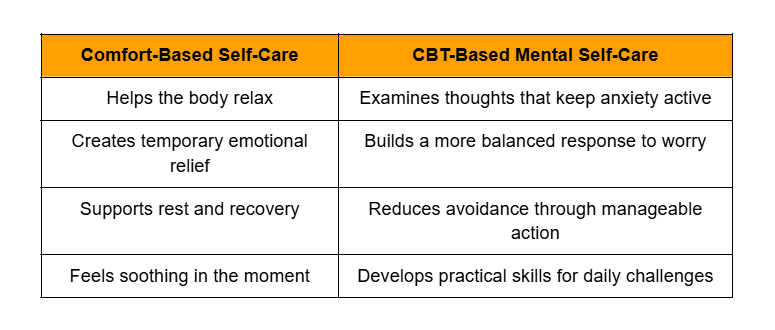
Calming activities still have value. CBT adds another layer by helping you understand what is happening in your mind and respond with greater clarity.
8 CBT-Based Self-Care Habits to Reduce Anxiety
Small, repeated habits can help you respond to anxiety with more awareness and less automatic fear. These CBT exercises work best when they become part of daily life rather than something you use only during difficult moments.
1. Notice and Challenge Negative Thoughts
Anxiety often presents predictions as facts. You may assume a conversation will go badly, a mistake will have serious consequences, or a physical sensation means something is wrong. Pause and ask what evidence supports the thought, what evidence challenges it, and what a more balanced explanation could be.
Try this simple prompt
- What am I predicting?
- What facts do I have?
- Am I overlooking another possible outcome?
- What would I say to someone I care about?
This is one of the most practical CBT techniques for anxiety because it helps create distance between a thought and your response to it.
Read Next: How to Improve Self-Worth Without Relying on External Validation
2. Keep a CBT Thought Journal
A thought journal helps you identify patterns that may be difficult to notice in the moment. Write down the situation, the thought that appeared, the emotion you felt, and the action you took. Then add a more balanced thought based on the full picture.
Here are some examples:
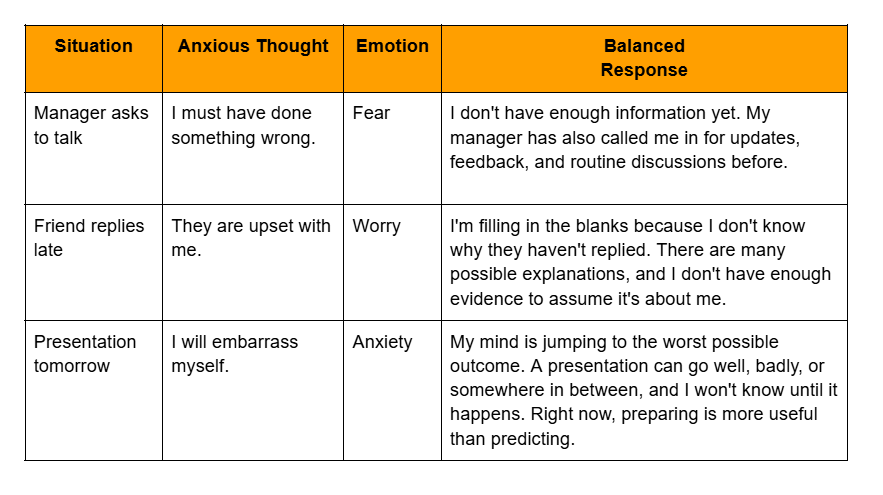
Over time, this form of CBT self-care can reveal recurring triggers, thinking habits, and avoidance patterns.
3. Practice Grounding Exercises
Grounding brings your attention back to the present when anxiety pulls you into imagined outcomes. One useful method is the five senses exercise.
Engage your senses in this manner while dealing with anxiety:
- Name five things you can see.
- Notice four things you can touch.
- Identify three sounds around you.
- Recognize two scents.
- Focus on one taste.
These healthy coping skills can help during spiraling thoughts, crowded environments, difficult conversations, or moments of physical tension.
4. Schedule Worry Time
Trying to suppress worry throughout the day can make it feel more persistent. Set aside 10 to 15 minutes at a fixed time to write down your concerns and consider which ones need action.
When a worry appears earlier, note it and remind yourself that you have time scheduled for it. During the session, separate practical concerns from imagined possibilities. Practical concerns may need a clear next step. Imagined possibilities may need a balanced response and a decision to redirect your attention.

5. Use Supportive Self-Talk
Anxiety often comes with harsh internal commentary which might result in a lower self-worth over time. You may call yourself weak, overreacting, or incapable when you are already under pressure. Supportive self-talk does not require false positivity. It means speaking to yourself with accuracy, patience, and perspective.
Try phrases such as these:
- "I feel anxious, and I can still take one small step."
- "This moment is uncomfortable, and I have handled difficult moments before."
- "I do not need complete certainty before making a decision."
- "My first thought is not always the full truth."
Supportive language can strengthen self-care for anxiety by reducing shame and helping you stay engaged with the situation.
6. Practice Mindful Breathing
Slow breathing can help you settle enough to think more clearly. Breathe in gently through your nose, pause briefly, and breathe out a little more slowly. Continue for one or two minutes without forcing a deep breath.
Focus on the sensation of air moving, the rise and fall of your chest, or the feeling of your feet on the floor. When your mind wanders, bring your attention back without criticism. This simple habit can fit into your morning routine, work breaks, or bedtime.
Read Next: Mindfulness Practices for Skeptics: A CBT Practitioner's No-Woo-Woo Guide
7. Take Small Action Instead of Avoiding Fears
Avoidance can bring immediate relief, yet it often keeps fear active. Choose one manageable action that moves you slightly closer to the situation you have been avoiding.
For example:
- Reply to one email instead of clearing the entire inbox.
- Stay at a social event for 20 minutes instead of cancelling.
- Make one phone call before asking someone else to do it.
- Practice part of a presentation with one trusted person.
Small actions build confidence through experience and help reset the mind gently. They also form an important part of cognitive behavioral therapy for anxiety.
8. Build a Consistent Daily Self-Care Routine
A useful routine should feel realistic on busy, low-energy, and stressful days. Choose a few daily self-care habits that support your thoughts, body, and behavior without creating another demanding checklist.
A simple routine might include:
- Two minutes of mindful breathing in the morning.
- A brief thought check during lunch.
- One small action toward something you have avoided.
- A short reflection before bed.
- Regular meals, movement, and a consistent sleep schedule.
Consistency matters more than intensity. A routine that takes ten minutes and happens regularly can become more useful than a long plan you rarely follow.
Create Your Own CBT Self-Care Routine
The best routine is one you can return to consistently. It does not need an hour of free time or a long checklist. A few realistic habits, repeated each day, often have a greater impact than an ambitious plan that quickly becomes difficult to maintain.
As you build your routine, think about the times of day when anxiety tends to show up. Some people wake up with racing thoughts, while others notice anxiety before meetings, social situations, or bedtime. Adding CBT self-care practices around those moments can make them easier to stick with.
Here are a few ideas to help you get started.
- Start With One Habit: Pick a single practice such as mindful breathing or a thought journal before adding something new.
- Attach It to an Existing Routine: Pair your new habit with something you already do, like your morning coffee or evening skincare.
- Keep It Short: Five consistent minutes often become more sustainable than a thirty minute routine.
- Track Small Wins: Notice when you challenged an anxious thought, faced a fear, or used one of your healthy coping skills instead of avoiding the situation.
- Adjust Without Judging Yourself: Your routine can change as your schedule and needs change. Flexibility helps you stay consistent over time.
There is no perfect routine that works for everyone. The aim should be to create one that feels practical enough to become part of everyday life.
Read Next: What Happens When You Stay Stuck Too Long Without Support
This International Self-Care Day, Prioritize Your Mental Well-Being
International Self-Care Day is a good reminder that mental well-being deserves the same attention as physical health. Looking after your mind is not something reserved for difficult seasons. It is a practice that supports how you handle stress, relationships, work pressure, and everyday challenges throughout the year.
If your current self-care for anxiety begins and ends with temporary relaxation, consider adding one or two CBT techniques for anxiety into your week. Challenging anxious thoughts, taking one small step instead of avoiding a situation, or spending a few minutes reflecting in a thought journal can gradually change how you respond to stress.
You do not have to change everything at once. A single habit, practiced consistently, can become the foundation for healthier emotional patterns over time.
When to Seek Professional Support

Self guided CBT exercises can support everyday anxiety, though extra guidance may help when worry starts interfering with your routines, choices, and relationships.
Professional coaching may be useful when:
- Anxiety Feels Difficult to Manage: Worry continues throughout the day and feels hard to interrupt without structured support.
- Avoidance Is Limiting Your Life: You regularly cancel plans, delay decisions, or withdraw from situations that feel uncomfortable.
- Physical Symptoms Feel Intense: Racing thoughts, muscle tension, nausea, dizziness, or breathlessness appear frequently during stressful moments.
- Daily Responsibilities Feel Harder: Anxiety begins disrupting your sleep, concentration, work, parenting, studies, or close relationships.
- Current Coping Habits Feel Insufficient: The techniques you use provide little relief or feel difficult to practice consistently.
A CBT certified coach can help you recognize recurring patterns, practice healthier responses, and apply practical tools to real situations. Structured support can also help you stay accountable as you build confidence and emotional regulation skills.
Read Next: How to Know If You Need a Life Coach (And What to Expect)
Conclusion
Self-care for anxiety becomes more meaningful when it supports the way you think, respond, and act during difficult moments. Thought journaling, grounding, mindful breathing, supportive self-talk, and small steps toward avoided situations can all become part of a realistic routine.
At Reclaim Happy, we are 5-star-rated CBT-certified life coaches who provide structured, personalized support for anxiety, burnout, emotional regulation, confidence, relationships, and major life transitions. Through flexible online sessions, we help you apply clear CBT frameworks to real situations, track the patterns behind your anxiety, and build practical coping skills that fit your daily life.
Book your free clarity session and begin working toward steadier thoughts, healthier responses, and greater emotional control.
FAQs
What are CBT-based self-care habits?
CBT-based self-care habits are daily practices that help you recognize unhelpful thinking patterns and respond to them in healthier ways. Unlike activities that simply help you relax for a short time, these habits focus on changing the thoughts and behaviors that keep anxiety active. Examples include keeping a thought journal, practicing grounding exercises, using balanced self-talk, and gradually facing situations you tend to avoid. With regular practice, they can become valuable healthy coping skills for managing everyday stress.
How can CBT help reduce anxiety?
Yes, cognitive behavioral therapy for anxiety can help reduce anxiety by teaching you to identify anxious thoughts, question them, and replace them with more balanced perspectives. It also encourages gradual action instead of avoidance, which helps build confidence over time. Rather than trying to eliminate anxious feelings completely, CBT helps you respond to them in a calmer and more constructive way through practical, repeatable techniques.
What are the best daily self-care habits for managing anxiety?
Some of the most effective daily self-care habits include practicing mindful breathing, recording anxious thoughts in a journal, challenging negative thinking, maintaining a consistent sleep routine, staying physically active, and taking small steps toward situations you usually avoid. These habits work best when practiced regularly, even on days when your anxiety feels manageable, because consistency helps strengthen healthier thinking and coping patterns.
How is CBT self-care different from traditional self-care?
CBT self-care focuses on changing the thinking and behavioral patterns that contribute to anxiety, while traditional self-care often focuses on relaxation and recovery. Activities like taking a bath, reading, or going for a walk can certainly help you feel calmer, but CBT adds practical strategies such as thought challenging, behavioral experiments, and grounding exercises. Combining both approaches often creates a more balanced way to support your mental well-being.
Can I practice CBT techniques at home?
Yes, many CBT techniques for anxiety can be practiced at home. Thought journals, grounding exercises, mindful breathing, positive self-talk, and scheduled worry time are all examples of techniques you can include in your daily routine. Starting with one simple habit and practicing it consistently often feels more manageable than trying several techniques at once. If anxiety continues to interfere with your daily life, structured coaching can help you apply these skills more effectively.
How long does it take for CBT self-care habits to reduce anxiety?
The timeline varies from person to person, though many people begin noticing small changes after practicing CBT exercises consistently for several weeks. The goal is gradual progress rather than immediate results. As you continue challenging anxious thoughts, reducing avoidance, and building healthier routines, those skills often become more natural and easier to use during stressful situations.
Can self-care alone help manage anxiety, or should I seek professional support?
Self-care can play an important role in managing anxiety, especially when it includes practical CBT habits rather than relaxation alone. However, if anxiety regularly affects your sleep, work, relationships, confidence, or daily responsibilities, additional support may be helpful. Working with a CBT certified coach can provide structure, accountability, and personalized guidance so you can build coping skills that fit your specific challenges and goals.