.jpg)
Some experiences end, but the emotional weight of them does not always leave at the same time. A breakup can be months behind you while anger still surfaces unexpectedly. A major loss can change how you relate to people, work, or even yourself. You can know that you want to move forward and still find yourself pulled back into the same thoughts, reactions, or emotional patterns.
An emotional healing coach helps you make sense of what is still affecting you and build healthier ways to respond in the present. Emotional healing coaching can support people working through difficult life experiences, unresolved emotions, grief, major transitions, self-doubt, or patterns that keep repeating long after the original situation has changed.
In this guide, we’ll look at what an emotional healing coach does, the kinds of challenges coaching can support, how it differs from grief counseling and therapy, and what to consider before choosing a coach.
What is an Emotional Healing Coach?
An emotional healing coach supports people who want to understand difficult emotions, change patterns connected to past experiences, and feel more grounded in their present life. Sessions can focus on grief, major transitions, confidence, self-worth, relationship experiences, or emotions that continue to surface even after a difficult chapter has ended.
Emotional healing coaching often brings attention to areas such as:
- Unresolved feelings connected to past experiences.
- Reactions or behaviors that keep repeating in relationships.
- Changes in confidence or self-worth after a difficult period.
- Grief and the emotional adjustments that follow loss.
- Difficulty trusting yourself or making decisions.
- Personal goals that feel harder to pursue because of emotional barriers.
An emotional healing life coach can help you put these experiences into perspective and develop practical ways to respond when old emotions or patterns appear. Sessions can also give you a consistent space to reflect on progress and decide which changes deserve your attention next.
What Does an Emotional Healing Coach Help With?
People seek emotional healing support for many reasons. Sometimes there is a specific experience they are struggling to move past. In other cases, the problem is a pattern that has followed them across relationships, decisions, or different stages of life. Coaching can help you understand these experiences more clearly and decide how you want to respond now.
Processing Difficult Life Experiences
A painful breakup, family conflict, betrayal, career setback, or other difficult experience can continue shaping your thoughts long after the situation itself has changed. You can find yourself replaying conversations, questioning your decisions, or reacting strongly when something reminds you of what happened.
Coaching gives you room to talk through what still feels unresolved and notice how the experience has influenced your beliefs, expectations, and behavior. From there, you can start developing responses that reflect where you are now instead of automatically falling back into old reactions.
Identifying Emotional Patterns That May Be Holding You Back
Emotional patterns can become so familiar that they are difficult to recognize from the inside. You could repeatedly seek reassurance, avoid difficult conversations, shut down during conflict, choose similar relationships, or assume the worst when something feels uncertain.
An emotional healing coach can help you notice when these patterns appear and what tends to trigger them. Once you understand the pattern, you have more room to question the assumptions behind it and practice a different response.
Building Self-Awareness and Healthier Coping Strategies
Self-awareness means understanding what you feel, what tends to trigger that response, and what you usually do next. This understanding becomes especially useful when emotions are intense and your automatic response creates more stress later.
Healthier coping strategies can include:
- Naming emotions more accurately instead of pushing them aside.
- Recognizing thoughts that intensify difficult feelings.
- Pausing before reacting during emotionally charged situations.
- Setting clearer boundaries around people or situations that drain you.
- Using grounding techniques when emotions feel difficult to manage.
- Replacing harsh self-talk with a more balanced internal response.
These skills can make difficult moments feel more manageable and help you respond with greater intention.
Moving Forward After Loss or Major Life Changes
Loss can change routines, relationships, identity, and expectations for the future. Major transitions such as divorce, relocation, career changes, or the end of an important relationship can create a similar sense of emotional disruption.
Emotional healing after grief has no universal timeline. Coaching can support you as you adjust to what has changed, reconnect with parts of your life that still matter, and think about what you want next. Some forms of grief require clinical mental health support, so a responsible coach should also recognize when your needs fall outside the scope of coaching.
Keep Reading: 10 Hidden Signs You Haven’t Fully Healed From Grief (And How Emotional Healing Helps)
Signs You Need Emotional Healing Support

You do not need to wait until your emotions feel unmanageable before asking for support. Sometimes the clearest reason to seek emotional healing support is the realization that you keep returning to the same problem despite genuinely wanting things to change.
You could benefit from additional support when:
- You Feel Emotionally Stuck: A past experience still occupies significant emotional space and makes moving forward feel difficult.
- The Same Patterns Keep Returning: Similar conflicts, reactions, or relationship dynamics continue appearing despite your efforts to change them.
- A Major Change Has Left You Directionless: Life looks different after a breakup, loss, career change, or transition, and you are unsure what comes next.
- Past Feelings Keep Entering Present Situations: Anger, fear, hurt, or mistrust from earlier experiences influences how you respond today.
- You Feel Disconnected From Yourself: Your goals, preferences, confidence, or sense of identity feel harder to recognize than they once did.
- Self-Doubt Keeps Interrupting Your Decisions: You question your judgment so frequently that taking action or trusting your choices becomes difficult.
Recognizing these patterns can help you decide what kind of support fits your situation. For some people, coaching provides the structure they need to move forward. Others need counseling or therapy, particularly when symptoms or concerns require clinical mental health care.
Emotional Healing Coach vs. Grief Counselor, What’s the Difference?
An emotional healing coach focuses on personal growth, emotional patterns, goals, and moving forward. A grief counselor focuses specifically on bereavement and loss.
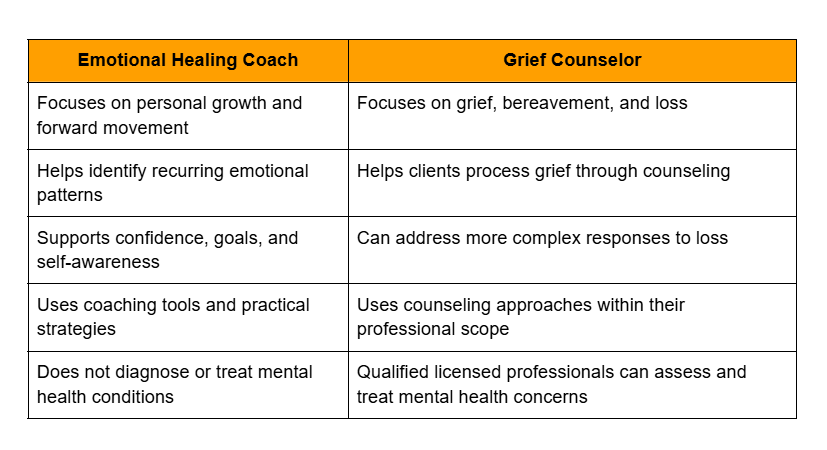
When comparing an emotional healing coach vs grief counselor, think about the kind of support you need. Coaching can help with goals, routines, confidence, and moving forward after loss. Severe distress or symptoms that disrupt daily life call for a qualified mental health professional.
Emotional Healing Coach vs. Therapist
An emotional healing coach helps with current patterns, personal goals, coping skills, and personal growth. A therapist can assess and treat mental health conditions, trauma, and significant psychological distress.
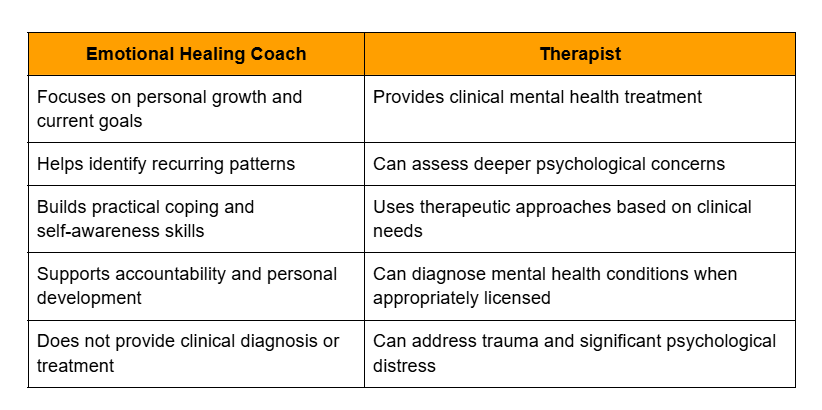
Coaching can fit when you want practical support with confidence, patterns, coping, or life changes. Therapy is more appropriate when you need diagnosis, trauma treatment, or specialized mental health care.
Continue Exploring: Certified Life Coach vs. Therapist: What's Right for You?
What Can You Expect From Emotional Healing Coaching?

Emotional healing coaching should feel personal to what you are dealing with rather than following the exact same formula for every client. Early conversations usually focus on what has been difficult, how it is showing up in your life now, and what you would like to feel or handle differently.
As sessions continue, you can expect a combination of reflection, practical strategies, and clear goals.
Depending on your needs, sessions can include:
- Identifying Triggers: Notice situations, conversations, or thoughts that bring difficult emotions to the surface.
- Recognizing Patterns: Look at recurring responses in relationships, decision-making, boundaries, confidence, or stressful situations.
- Questioning Unhelpful Thoughts: Examine assumptions and anxious self-talk that continue to influence how you see yourself or your circumstances.
- Building Coping Skills: Practice strategies you can use when difficult emotions appear during everyday life.
- Setting Personal Goals: Decide what moving forward means to you and break larger changes into realistic steps.
- Reviewing Progress: Talk about the changes in your mindset, where you still feel stuck, and what deserves more attention.
You should also know what your coach can and cannot provide. Clear expectations around communication, session structure, goals, and the scope of emotional healing support help you make an informed decision before committing to coaching.
Read Next: Why Grief Feels Physical: Understanding Body-Stored Emotions & The Path to Release
How to Choose the Right Emotional Healing Coach
Choosing the right emotional healing coach comes down to fit, experience, communication, and whether the coaching approach matches what you want help with. You should understand how sessions are structured, what the coach focuses on, and where coaching ends and clinical mental health care begins.
Look for someone who can clearly explain:
- Their approach to emotional healing coaching.
- The types of emotional challenges they regularly support.
- How they help clients set and work toward goals.
- What happens during a typical session.
- How progress is reviewed over time.
- What they do when a client's needs fall outside the scope of coaching.
Pay attention to how comfortable you feel speaking with them as well. A good emotional healing life coach should create enough space for honesty while still helping you move toward practical changes.
It also matters that the coach understands professional boundaries. Someone offering emotional healing support should be clear about when counseling, therapy, or another form of mental health care would be more appropriate.
Looking for Emotional Healing Support in Columbus, Ohio?
If you are looking for an emotional healing coach in Columbus, Ohio, Reclaim Happy offers online CBT-based coaching designed around the emotional patterns and life challenges that are affecting you now. Our online coaching is flexible and accessible from anywhere throughout the US. We help clients work through self-doubt, unresolved emotions, confidence issues, grief-related transitions, and the habits that make it harder to move forward.
At Reclaim Happy, you’ll work with CBT-certified life coaches who listen closely, help you understand the patterns behind difficult emotions, and share practical tools you can use between sessions. We also support challenges around anxiety, burnout, self-worth, confidence, relationships, and major life transitions, so your coaching can reflect the wider picture of what you are carrying.
Book your free consultation and take the first step toward feeling lighter, stronger, and more like yourself again.
Hear How Reclaim Happy Helped Michelle Heal After a Profound Personal Loss
FAQs
What does an emotional healing coach do?
An emotional healing coach helps you understand difficult emotions, recognize recurring patterns, and develop healthier ways to move forward. Emotional healing coaching can support challenges connected to grief, major life changes, self-worth, confidence, relationships, and unresolved feelings from past experiences. Sessions can also help you build practical coping strategies for situations that continue to feel emotionally difficult.
How is an emotional healing coach different from a grief counselor?
An emotional healing coach differs from a grief counselor in the type and scope of support provided. Coaching can address personal growth, emotional patterns, goals, confidence, and moving forward after difficult experiences. A grief counselor specializes in bereavement and can provide counseling for grief, including concerns that require professional mental health care.
Can an emotional healing coach help after a loss or major life change?
Yes, an emotional healing coach can help after a loss or major life change when you want support adjusting to what has changed and rebuilding direction. Emotional healing after grief can involve changes in routines, confidence, relationships, identity, and future plans. Coaching can help you work through these areas while developing practical strategies for your present life.
Is emotional healing coaching the same as therapy?
No, emotional healing coaching is not the same as therapy. Coaching supports personal growth, self-awareness, coping skills, goals, and changes you want to make in your present life. Therapy provides clinical mental health care and can address trauma, mental health conditions, and significant psychological distress. A responsible coach should recognize when your needs require support from a qualified mental health professional.