
You agree to one more favor, accept another task, or stay quiet about something that bothers you. In the moment, saying yes feels easier than facing disappointment, conflict, or the fear of seeming selfish. Later, resentment builds, your energy drops, and you wonder why other people keep expecting so much from you.
For many people, setting boundaries feels uncomfortable because guilt appears before relief does. You may understand that your time and emotional energy matter, yet still feel responsible for how others react. This pattern often develops through people pleasing, family expectations, past relationships, or environments where keeping the peace felt safer than speaking honestly.
Learning how to say no without guilt takes practice, especially when saying yes has become your automatic response. This guide explains the psychology behind boundary guilt and shares practical ways to create healthy boundaries with family, coworkers, and romantic partners. You will also learn how to respond when someone pushes back, communicate clearly without lengthy explanations, and protect your needs without becoming harsh or disconnected.
The Psychology of Boundary Guilt
Boundary guilt often appears when your mind connects saying no with rejection, conflict, or disappointing someone you care about. You may know that setting boundaries is reasonable, yet your body still reacts with tension, anxiety, or the urge to take your words back.
This guilt often grows from patterns such as these:
- Approval Became a Source of Safety: You learned that being helpful, agreeable, or easygoing kept relationships calm and reduced conflict.
- Other People’s Feelings Became Your Responsibility: You began measuring your choices by their reactions instead of your own limits.
- Saying No Feels Like Letting Someone Down: Your mind treats a declined request as proof that you are selfish or uncaring.
- Conflict Feels More Dangerous Than Exhaustion: You accept discomfort privately because direct conversations feel harder in the moment.
- People Pleasing Became Automatic: You agree before checking your energy, schedule, needs, or genuine willingness to help.
Feeling guilty does not mean your boundary is wrong. It may mean you are changing a familiar pattern that once helped you feel accepted or secure. Learning how to say no without guilt starts with noticing that discomfort and staying with your decision long enough for a healthier pattern to form.
Read Next: CBT for Anxiety - 5 Techniques That Actually Work in Real Life
Common Myths We Believe About Good People and Saying Yes
Many people grow up believing that kindness means staying available, agreeable, and helpful at all times. These ideas can make setting boundaries feel selfish, even when saying yes leaves you tired, resentful, or stretched beyond your limits.
- Good People Always Help
Caring people can support others while still respecting their own time, energy, and emotional capacity.
- Saying No Is Rude
A clear, respectful answer can be more honest than agreeing and feeling resentful later.
- Disappointment Means You Did Something Wrong
Someone can dislike your decision without your boundary becoming unfair or unkind.
- You Need a Serious Reason to Decline
Your schedule, energy, comfort, and personal priorities are valid reasons to say no.
- Close Relationships Should Not Need Boundaries
Strong relationships often depend on clear expectations, honest communication, and mutual respect.
- Being Helpful Means Being Available
Support works best when it comes from genuine willingness rather than pressure or fear.
Questioning these beliefs can make setting boundaries without guilt feel more possible. By doing so, saying yes becomes a considered choice instead of an automatic response shaped by people pleasing.
Boundary Basics: What a Boundary Is and Is Not
A boundary is a clear limit that protects your time, energy, emotional well-being, and personal values. It communicates what you are comfortable with, what you can take on, and how you expect to be treated. Understanding what boundaries are becomes easier when you separate them from control, punishment, or withdrawal.
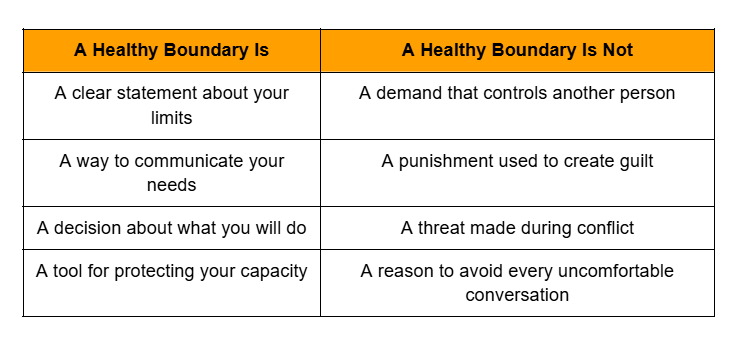
Healthy boundaries focus on your own actions. You can say, "I cannot stay late tonight", or "I will end the conversation if yelling continues". These statements explain your limit and your response without trying to force another person to behave a certain way.
Read Next: How to Improve Self-Worth Without Relying on External Validation
Boundaries with Family
Family relationships can make setting boundaries especially difficult because old roles, expectations, and emotional habits often run deep. You may still feel pressure to be the dependable one, avoid upsetting a parent, or agree to plans you do not have the energy for.
When working on boundaries with family, start with one recurring situation instead of trying to change every pattern at once.
- Name the Specific Limit: Decide what needs to change, such as unplanned visits, personal questions, financial requests, or constant availability.
- Use Clear Language: Keep your message simple, direct, and respectful without softening it until the meaning becomes unclear.
- Repeat the Boundary Calmly: Family members may test a new limit, especially when they benefited from the previous pattern.
- Follow Through Consistently: Your actions help relatives understand that the boundary reflects a genuine need and ongoing decision.
- Expect Some Discomfort: Guilt can appear when setting boundaries with parents, even when your request is thoughtful and reasonable.
A clear response might sound like this:
"I am not comfortable discussing that topic. If the conversation continues in that direction, I will step away and speak with you another time."
You do not need to convince your family that your limit is valid. Calm repetition and consistent follow through usually communicate more than a lengthy defense.
Boundaries at Work
Workplace boundaries can become difficult when reliability is tied to accepting every request. You may stay late, answer messages during personal time, take on unfinished work from coworkers, or avoid speaking up when your workload becomes unrealistic. Over time, this pattern can contribute to stress, resentment, and burnout.
Practical work life balance boundaries help make your capacity visible before exhaustion becomes the first sign that something needs to change.
- Clarify Your Current Priorities: Ask which assignment should take priority when a new request conflicts with existing deadlines.
- Set Communication Hours: Make your availability clear and avoid creating an expectation of constant evening or weekend responses.
- Pause Before Agreeing: Review your workload before accepting additional responsibilities or committing to an unrealistic completion date.
- Address Scope Changes Early: Speak up when a project grows beyond the time, resources, or responsibilities originally discussed.
- Use Direct Professional Language: State what you can complete, when you can complete it, and what needs to be adjusted.
A useful response to extra work could be:
"I can take this on, though I would need to move the current deadline for the monthly report. Which task should I prioritize?"
Setting boundaries at work does not require becoming less cooperative. It helps you communicate your workload honestly and protect the quality of the work you have already committed to.
Need extra help? We provide comprehensive CBT-based career coaching that explores where you're stuck and how to get you back to functioning at your full potential
Boundaries in Romantic Relationships
Healthy boundaries in relationships create room for honesty, trust, individuality, and emotional safety. They can cover communication, privacy, personal time, physical affection, finances, social plans, family involvement, and the way conflict is handled.
A boundary conversation works best when it focuses on a specific behavior and the impact it has on you.
- Speak Before Resentment Builds: Raise concerns while you can still discuss them calmly rather than waiting until frustration takes over.
- Describe the Situation Clearly: Focus on what happened instead of assigning motives or making broad claims about your partner.
- State What You Need: Explain the change that would help you feel respected, secure, or emotionally supported.
- Invite Honest Discussion: Listen to your partner’s needs while remaining clear about the limit you are communicating.
- Notice Repeated Boundary Violations: Pay attention when your concerns are dismissed, mocked, ignored, or repeatedly treated as unreasonable.
You might say:
"I need us to pause conversations when voices are raised. Let's continue once we are both able to speak calmly"
A caring partner may need time to understand or adjust to a new boundary. Respect still shows through their willingness to listen, discuss the concern, and take your limit seriously.
Read Next: Relationship Tips from a CBT Practitioner: How to Stop the Same Fight from Repeating
How to Say No Without Over-Explaining

Many people explain too much because they hope a detailed reason will prevent disappointment or conflict. In practice, long explanations can make your answer sound uncertain and create more room for negotiation. Learning how to say no without explaining starts with trusting that a respectful answer can be complete on its own.
Use this simple structure:
- Acknowledge the request.
- State your answer clearly.
- Add a brief reason when it feels useful.
- End without reopening the decision.
Here are a few examples:
- "Thank you for thinking of me. I cannot take that on right now."
- "I am not available this weekend, but I hope it goes well."
- "I cannot commit to that deadline with my current workload."
- "I am going to pass, though I appreciate the invitation."
- "That does not work for me, so I will need to say no."
If you tend to struggle with saying no without guilt, pause before answering. A short delay gives you time to check your schedule, energy, and genuine willingness before an automatic yes takes over.
What to Do When Someone Pushes Back
Pushback does not automatically mean your boundary was unfair. People may react because the new limit changes a pattern they were comfortable with. They may question your reason, become defensive, make you feel guilty, or act as though your decision is open for debate.
When someone challenges your boundary:
- Repeat the Same Message: Keep your wording calm and consistent instead of creating new explanations each time.
- Avoid Defending Every Detail: A long defense can shift the conversation away from your limit and toward their approval.
- Name the Interaction Clearly: Point out when the conversation becomes disrespectful, pressuring, or emotionally manipulative.
- Follow Through on Your Response: Leave the conversation, end the call, or step back when the stated limit is ignored.
- Review Repeated Patterns: Frequent boundary violations may show that the relationship needs stronger limits or more distance.
When deciding what to do when someone crosses your boundaries, focus on your next action rather than trying to force understanding. A boundary becomes meaningful through consistent follow through.
Read Next: How to Know If You Need a Life Coach (And What to Expect)
How Coaching Supports You While You Practice Boundaries

Knowing what to say is often easier than saying it in a real conversation. Guilt, fear of conflict, family roles, workplace pressure, and past relationship patterns can quickly pull you back into people pleasing, even when you understand the value of healthy boundaries.
Through boundary coaching, we help you identify where your limits break down, what thoughts appear before you say yes, and which situations trigger the strongest guilt. As CBT certified coaches, we work with you to challenge beliefs around selfishness, rejection, responsibility, and approval while building language that feels direct and natural.
Coaching can support you as you:
- Prepare for Difficult Conversations: Practice clear wording before speaking with a parent, manager, partner, friend, or relative.
- Recognize People Pleasing Patterns: Notice when fear, guilt, or pressure is shaping your response more than genuine choice.
- Build Confidence Through Practice: Start with manageable limits and review what happened after each real conversation.
- Handle Emotional Pushback: Develop calmer responses when someone becomes upset, critical, dismissive, or demanding.
- Strengthen Follow Through: Create realistic actions that support the boundary after you communicate it.
The work is practical and personal. We help you develop boundaries that fit your relationships, responsibilities, and values, so saying no becomes clearer, steadier, and less emotionally exhausting.
Conclusion
Setting boundaries can feel uncomfortable when you are used to keeping the peace, staying available, or putting other people first. That discomfort often fades as you become clearer about what you can manage, what you need, and what you are no longer willing to carry. Each honest conversation also helps you trust your own limits a little more.
At Reclaim Happy, we are CBT-certified life coaches who help you understand why guilt, fear of conflict, and people pleasing keep pulling you past your limits. We work with you to prepare for real conversations, challenge the beliefs that make saying no feel unsafe, and practice responses that fit your voice, relationships, and daily life. Boundary work often connects with anxiety, burnout, confidence, emotional regulation, and recurring relationship patterns, so we address the wider picture rather than treating each difficult conversation in isolation.
Book your free first consultation and start setting boundaries without guilt in the relationships that matter most.
FAQs
Why do I feel guilty when I say no?
You usually feel guilty because saying no conflicts with beliefs you have carried for a long time. You may have learned that being helpful keeps relationships safe, that other people's needs should come first, or that disappointing someone makes you selfish. These beliefs often develop through people pleasing, family expectations, or past experiences. As you become more comfortable setting boundaries, the guilt often becomes less intense because your mind starts recognizing that protecting your time and energy is healthy, not harmful.
Why do I feel bad after setting boundaries?
Feeling bad after setting boundaries is common, especially if you have spent years putting other people's needs ahead of your own. A new boundary changes familiar relationship patterns, so discomfort is a natural response. Feeling guilty does not automatically mean you made the wrong decision. In many cases, it simply means you are practicing a different way of responding while your confidence catches up with your actions.
Am I a people pleaser?
You may be a people pleaser if you regularly say yes when you want to say no, avoid conflict at the expense of your own well-being, or feel responsible for keeping everyone happy. Other signs include apologizing excessively, over-explaining your decisions, struggling to ask for help, or feeling resentful after agreeing to things you did not want to do. Recognizing these patterns is an important first step toward building healthy boundaries.
What are examples of healthy boundaries?
Healthy boundaries are clear limits that protect your time, energy, emotional well-being, and personal values. Examples include declining extra work when your schedule is full, asking family members to respect your privacy, turning off work notifications after office hours, ending conversations that become disrespectful, or telling a partner what you need during conflict. The objective here isn't to control other people but to communicate what you are comfortable with and how you will respond.
How do I set boundaries with toxic family?
Boundaries with family begin by identifying one specific behavior you want to change instead of trying to fix the entire relationship at once. Keep your message clear, respectful, and consistent, then follow through if the boundary is ignored. When setting boundaries with parents or other relatives, you do not need to justify every decision or convince them to agree. Calm consistency usually has a stronger impact than repeated explanations.
How do I say no to extra work?
You can say no to extra work by responding honestly and professionally. Acknowledge the request, explain your current workload if needed, and ask your manager which task should take priority if both cannot be completed. Setting boundaries at work is about communicating your capacity, not avoiding responsibility. Clear conversations help protect your workload while maintaining professional relationships.
How do I set boundaries with my partner?
Boundaries in relationships work best when they are discussed early and communicated calmly. Focus on one specific behavior, explain how it affects you, and describe what you need instead. Listen to your partner's perspective without losing sight of your own limit. Healthy relationships make space for both people to express their needs, even when those conversations feel uncomfortable.
How do I stop over-explaining myself?
You can stop over-explaining by reminding yourself that a respectful answer does not require a lengthy defense. Start with a clear response, add a brief explanation if you genuinely want to, and avoid filling silence because you feel guilty. Learning how to say no without explaining becomes easier as you realise that your decision does not depend on convincing everyone else that it is reasonable.
What if someone gets mad at my boundaries?
Someone becoming upset does not automatically mean your boundary is unfair. People sometimes react because your limit changes a pattern that benefited them. Stay calm, repeat your message if necessary, and avoid turning the conversation into an argument about your right to have boundaries. When deciding what to do when someone crosses your boundaries, focus on following through with the response you communicated rather than trying to change the other person's reaction.
Can a life coach help with boundaries?
Yes, a life coach can help you build stronger boundaries, especially if guilt, anxiety, or people pleasing make it difficult to follow through. At Reclaim Happy, through boundary coaching, we help you identify recurring patterns, prepare for difficult conversations, and practice responses that feel natural in your own relationships. We also help you work through the thoughts and emotions that make setting boundaries without guilt feel challenging, so the changes become easier to maintain over time.