.jpg)
Do you second guess what you say, compare yourself with others, struggle to accept compliments, or hold back from opportunities because you already expect yourself to fall short? These patterns can quietly shape your relationships, work, boundaries, and the way you see your own abilities.
Working with a self-esteem coach can give you practical support as you begin changing those patterns. The right coach can help you understand what is keeping your confidence low, challenge unhelpful thinking, recognize your strengths, and take actions that gradually build a healthier sense of self-worth. Coaching is personal, so finding someone whose approach fits you matters just as much as deciding to seek support in the first place.
This guide explains what to look for when choosing a self-esteem coach, which questions are worth asking before you begin, and how to tell when a coach feels like the right fit for your goals.
What Does a Self-Esteem Coach Do?
A self-esteem coach helps you identify the thoughts, habits, and behaviors that keep confidence low. The coaching approach often focuses on negative self-talk, fear of judgment, comparison, boundaries, self-worth, and the tendency to dismiss your own strengths. Sessions are usually practical and goal focused, with attention on how these patterns show up in daily life.
A coach can help you:
- Recognize recurring thought patterns that weaken confidence.
- Challenge harsh self-criticism with more balanced thinking.
- Build stronger boundaries in work and relationships.
- Set goals that feel realistic and personally meaningful.
- Practice responding differently in situations that trigger self-doubt.
- Strengthen self-trust through consistent action.
Good self-esteem coaching should leave you with tools you can actually use between sessions. It's motive must be to help you build confidence from the inside rather than relying on constant reassurance from other people.
Signs Your Self-Esteem Is Holding You Back
You do not need to hit a breaking point before working on self-esteem. Many people seek support because they are tired of feeling held back by the same internal patterns. A self-confidence coach can help when self-doubt starts affecting decisions, relationships, work, or your willingness to take healthy risks.
Common signs include:
- You Second Guess Yourself Constantly: Even simple decisions turn into long internal debates because you do not trust your own judgment.
- Your Inner Voice Is Harsh: Mistakes quickly become proof that you are not capable, likable, or good enough.
- Boundaries Feel Difficult: You agree to things you do not want because disappointing someone feels worse than overextending yourself.
- You Depend on External Validation: Praise feels necessary, while criticism can affect your confidence for hours or days.
- Fear Keeps You Small: You avoid opportunities, conversations, or changes because failure feels too personal.
- You Struggle to Name Your Strengths: Compliments feel uncomfortable, and your attention goes straight to what you think needs fixing.
These patterns can become deeply familiar. Working with a coach gives you a structured space to understand them and practice different responses.
Struggling with Boundaries?
Take a look at our guide on Setting Boundaries Without Guilt: A Life Coach's Guide to Saying No
What to Look for When Choosing a Self-Esteem Coach
Choosing a self esteem coach deserves more thought than comparing websites or picking whoever sounds the most confident online. You are going to talk openly about self-doubt, fears, habits, and situations that feel personal, so the right fit matters. Look closely at the coach's method, experience, communication style, structure, and practical availability before committing.
1. A Coaching Approach That Matches Your Goals
Different coaches focus on different parts of confidence work. One person may concentrate on self-worth and identity. Another may spend more time on mindset, communication, career confidence, relationships, or personal development.
Before choosing, get clear on what you want help with. Someone struggling with workplace confidence needs a different emphasis from someone dealing with relationship insecurity or chronic self-criticism. A good coach should be able to explain how their approach connects with the goals you bring into the process.
2. Relevant Experience and Expertise
Look beyond broad claims about helping people become more confident. Ask what kinds of challenges the coach works with regularly and what training supports their approach.
Relevant experience can include work with:
- Low self-worth and negative self-talk.
- Anxiety around judgment or rejection.
- Boundary setting and assertiveness.
- Career confidence and decision making.
- Repetitive relationship patterns and approval seeking.
- Major life transitions that have affected identity or confidence.
A strong self worth coach should be able to explain their areas of experience clearly without making exaggerated promises.
3. A Coaching Style You Feel Comfortable With
Trust matters because self-esteem work often touches sensitive parts of your life. You should feel comfortable speaking honestly without worrying that you will be judged, rushed, or talked over.
Pay attention to how the coach communicates during an introductory conversation.
Do they listen carefully?
Do their questions feel thoughtful?
Do they explain things clearly?
A useful coaching relationship should feel supportive and direct at the same time. You need enough comfort to be open and enough challenge to keep growing.
Explore CBT-focused Coaching Style: CBT-Based Self-Care Habits That Actually Reduce Anxiety
4. Clear Goals and a Structured Process
Good coaching has direction. You should understand what sessions generally look like, how goals are set, and how progress is reviewed over time.
Ask how the coach handles:
- Goal setting at the beginning of coaching.
- Progress between sessions.
- Exercises or reflection outside sessions.
- Changes in goals as confidence improves.
- Moments when you feel stuck or discouraged.
A clear mindset reset process helps you understand what you are working toward instead of attending sessions without a sense of movement.
5. Availability and Coaching Format
The practical side matters too. A great coach is not a good fit if the schedule, format, or frequency makes consistent sessions difficult.
Think about:
- Virtual versus in person sessions.
- Session length and frequency.
- Scheduling flexibility.
- Time zone differences.
- How easily coaching fits around work and family responsibilities.
A confidence life coach who works virtually can be especially useful when you need more flexibility or want access to someone outside your immediate area. The best format is the one you can realistically commit to and use consistently.
Questions to Ask Before Hiring a Self-Esteem Coach

A first conversation with a self esteem coach should give you more than a general sense that they seem nice or encouraging. Use that time to understand how they work, what they specialize in, and whether their approach fits what you actually want to change.
Useful questions include:
- What is your approach to self-esteem coaching?
Listen for a clear explanation of how the coach works rather than broad promises about helping you “feel more confident.”
- What types of challenges do you typically help clients with?
This helps you see whether they regularly work with concerns such as negative self-talk, low self-worth, boundaries, approval seeking, or fear of judgment.
- How are your coaching sessions structured?
Ask what usually happens during a session and whether there is a consistent process behind the conversations.
- How do you help clients work toward their goals?
A coach should be able to explain how goals are identified, broken down, and revisited as you make progress.
- Do you give exercises or practical work between sessions?
Confidence grows through what you practice outside the coaching session too. Find out whether the process includes reflection prompts, exercises, action steps, or other ways to apply what you discuss.
- How do you track progress?
Progress in self esteem coaching is not always measured by one dramatic change. It can show up in stronger boundaries, less second guessing, more balanced self-talk, or greater willingness to take action.
- What can I expect from the coaching process?
Their answer should help you understand the pace, expectations, and level of participation involved.
- How will I know whether your coaching approach is right for me?
A good coach should be comfortable discussing fit openly rather than pressuring you to commit.
- What happens if I feel stuck during coaching?
This can tell you a lot about how adaptable and thoughtful the coach is when progress is not straightforward.
You are not interviewing someone to find the “perfect” answer to every question. You are listening for clarity, consistency, and whether the coach can explain their work in a way that makes sense to you.
Read Next: Mindfulness Practices for Skeptics: A CBT Practitioner's No-Woo-Woo Guide
Self-Esteem Coach vs. Self-Confidence Coach: Is There a Difference?
A self esteem coach and a self confidence coach often work with similar challenges, but they can place emphasis on different areas. Self esteem centers more on how you see and value yourself, while self confidence is often tied to how capable you feel in specific situations.
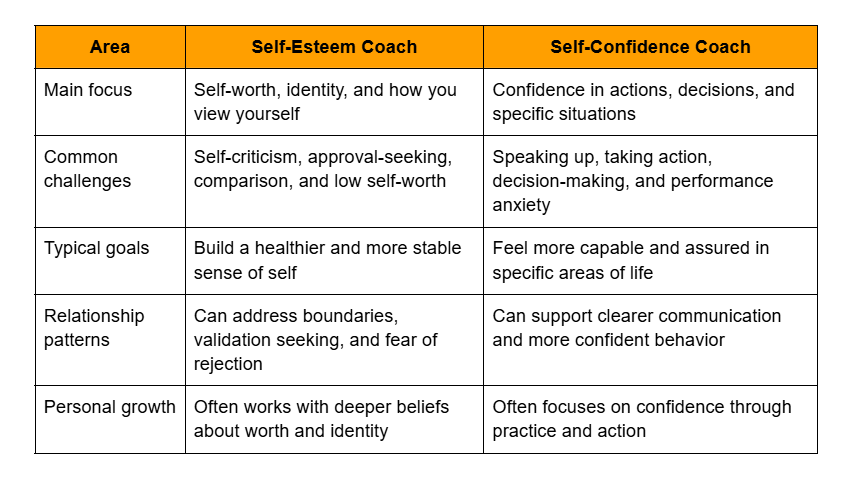
There is plenty of overlap between the two. A self esteem life coach can help you strengthen self worth while also building confidence in work, relationships, and everyday decisions. Rather than choosing based on the title alone, look at the coach's experience, approach, and the challenges they regularly help clients address.
Should You Choose a Local or Online Self-Esteem Coach?
Both local and online coaching can work well. The better choice comes down to the kind of access, flexibility, and interaction that fits your life.
If you are specifically looking for a self-esteem coach in Columbus Ohio or a life coach in Columbus Ohio, local coaching can appeal if you value face-to-face sessions or prefer working with someone familiar with the area. For some people, having a set place to go also creates a stronger sense of routine around coaching.
Online coaching gives you a wider choice of coaches and removes travel from the equation. It can also make regular sessions easier to fit around work, parenting, school, or other responsibilities. Someone searching for a self confidence coach in Columbus does not necessarily need to limit the search to coaches who meet in person if virtual sessions feel more convenient.
What matters most is whether you can engage consistently and speak openly in the format you choose. A strong coaching relationship depends far more on trust, approach, and fit than on whether you are sitting in the same room.
Keep Reading: What Happens When You Stay Stuck Too Long Without Support
How to Know You've Found the Right Self-Esteem Coach
The right self-esteem coach should make you feel comfortable enough to speak openly while still challenging the patterns that are keeping you stuck. You should leave conversations with greater clarity about what you are working on rather than feeling as though you simply had a supportive chat.
A good fit usually looks like this:
- You feel heard without feeling judged: You can talk honestly about insecurities, mistakes, fears, and difficult relationships without feeling embarrassed or dismissed.
- Their approach makes sense to you: The coach can explain how they work and why certain exercises, questions, or strategies connect to your goals.
- Sessions have direction: There is a clear focus rather than jumping randomly between topics each week.
- You are encouraged to take action: Useful coaching extends beyond conversation and helps you practice new ways of thinking, communicating, or responding between sessions.
- Your progress is noticed and reviewed: Small changes such as speaking up sooner, questioning negative self-talk, or relying less on reassurance should become part of the conversation.
- You do not feel pressured: A coach should give you enough information to make your own decision about continuing rather than pushing you into a package or making unrealistic promises.
Pay attention to how you feel after the first few conversations. You do not need every session to feel easy, especially when you are working on uncomfortable patterns, but you should understand what you are working toward and feel that the relationship gives you space to grow.
Conclusion
Choosing a self-esteem coach is personal. Qualifications and experience matter, but so do the way the coach communicates, the structure they bring to sessions, and whether you feel comfortable talking honestly with them. Ask questions before committing, look closely at how they work, and choose someone whose approach connects with the changes you actually want to make.
At Reclaim Happy, we are CBT-certified life coaches who help you work through low self-worth, negative self-talk, approval seeking, boundaries, confidence, and the thought patterns that keep you second guessing yourself. We use practical CBT-based coaching to help you understand those patterns, test more balanced ways of thinking, and build confidence through changes you can practice in everyday situations.
Book your free self-worth coaching session and start building stronger self worth, clearer thinking, and confidence that feels grounded in who you are.
FAQs
What does a self-esteem coach do?
A self-esteem coach helps you build a healthier sense of self-worth and confidence. Sessions can focus on negative self-talk, approval seeking, boundaries, comparison, fear of judgment, and difficulty recognizing your strengths. The work is practical and centered on changing patterns that affect daily decisions and relationships.
What is the difference between a self-esteem coach and a self-confidence coach?
The difference between a self-esteem coach and a self-confidence coach is mainly the area of focus. Self-esteem coaching centers more on self-worth and identity, while confidence coaching often targets specific situations such as speaking up, taking action, or making decisions. More often than not, self-esteem and self-confidence coaching overlap for holistic personal development.
How do I find the right self-esteem coach?
You find the right self-esteem coach by comparing experience, coaching style, structure, and personal fit. Ask about their training, areas of focus, session format, and how they help clients work toward goals. You should also feel comfortable speaking openly with them.
Can I work with a self-esteem coach online?
Yes, you can work with a self-esteem coach online through virtual sessions. Online coaching can make scheduling easier and gives you access to coaches outside your immediate area. Look at session frequency, availability, and coaching style before choosing.
How do I find a self-esteem coach in Columbus, Ohio?
You can find a self-esteem coach in Columbus, Ohio by comparing coaches based on their training, approach, experience, and personal fit. Reclaim Happy offers CBT-based coaching for self-esteem, confidence, boundaries, and related challenges through online sessions available throughout the US.