You close your laptop, but your mind keeps working. You replay conversations, worry about tomorrow's deadlines, and feel guilty for taking a break. Even after a weekend off, Monday arrives and you're already exhausted.
Work burnout can make a job you once enjoyed feel overwhelming. Your patience gets shorter, your motivation drops, and even simple tasks demand an unusual amount of effort. You know something needs to change, but finding the energy to make those changes feels difficult.
Work burnout recovery can begin with small, realistic adjustments. This guide explains how burnout develops, how cognitive behavioral therapy (CBT) techniques can support recovery, and how to build a practical burnout recovery plan that fits your life. We'll also explore when and how career and burnout coaching can help.
What Is Work Burnout?
Work burnout is a condition associated with chronic workplace stress that has not been successfully managed. The World Health Organization (WHO) classifies burnout as an occupational phenomenon, characterized by exhaustion, increased mental distance or cynicism toward work, and reduced professional effectiveness. It is not classified as a medical condition.
Burnout often develops gradually, particularly when workplace demands consistently exceed your capacity to recover.
Common Signs of Work Burnout

The signs of burnout can appear in your thoughts, emotions, behavior, and physical well-being.
- Persistent exhaustion: Feeling drained before the workday begins or struggling to recover after time off.
- Reduced motivation: Finding it difficult to start tasks or care about responsibilities that previously mattered.
- Irritability and frustration: Becoming impatient with coworkers, family members, or yourself.
- Difficulty concentrating: Forgetting details, making unusual mistakes, or struggling with decisions.
- Cynicism toward work: Feeling detached, resentful, or increasingly negative about your job.
- Changes in sleep: Having trouble falling asleep because your mind keeps returning to work.
- Physical tension: Experiencing headaches, muscle tightness, or other stress-related discomfort.
These experiences can have several causes. If symptoms persist or significantly interfere with daily life, consider speaking with a healthcare professional.
Also Read: Work-Life Balance Out of Sync? Here's How to Reclaim Balance
Burnout vs Stress vs Depression: Know the Difference
Stress, burnout, and depression can share symptoms, but understanding their differences helps you choose appropriate support.
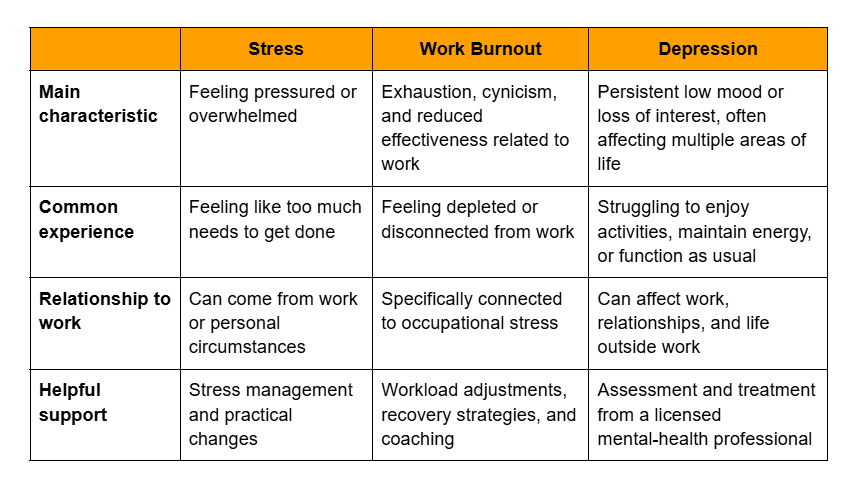
Burnout and depression can occur together. If your symptoms extend well outside work, include persistent hopelessness, or significantly affect your ability to function, seek professional mental health support rather than assuming burnout is the only cause.
Why Rest Alone Doesn't Fix Burnout
A vacation can provide temporary relief, but returning to the same conditions often brings the exhaustion back.
Burnout develops through a combination of workplace pressures and the ways we respond to them. Unrealistic workloads, limited control, insufficient support, and unclear expectations can all contribute. Personal habits such as perfectionism, difficulty saying no, and constantly checking messages can make recovery harder.
For example, you might take Friday off but spend the weekend worrying about unfinished tasks. Your body gets a break from the office while your mind remains occupied with work.
Effective burnout recovery addresses both sides: the conditions creating excessive pressure and the thought patterns and habits that keep you engaged with that pressure.
Also Read: Why Rest Feels Uncomfortable When You’re Burnt Out
The 5-Step CBT Burnout Recovery Plan

If you're wondering how to recover from work burnout, start with a manageable process rather than trying to change everything immediately.
- Pause and stabilize: Protect sleep, basic routines, and recovery time.
- Identify burnout thoughts: Notice beliefs that increase pressure and guilt.
- Reframe unhelpful thinking: Practice more balanced responses to stressful situations.
- Set boundaries and rebuild energy: Reduce unnecessary demands and gradually return to enjoyable activities.
- Prevent recurrence: Recognize warning signs and review your workload regularly.
These steps combine practical recovery habits with CBT techniques for stress. They are a flexible framework, not a fixed medical treatment schedule.
Step 1 – Pause and Stabilize (Weeks 1–2)
During the first week or two, prioritize reducing immediate strain. Trying to overhaul your career while severely exhausted can create additional pressure.
Start with three manageable actions:
- Protect your sleep: Keep a reasonably consistent bedtime and create a short wind-down routine.
- Simplify your days: Maintain regular meals, short breaks, and a little movement without turning recovery into another demanding project.
- Reduce what you can: Discuss deadlines, delegate suitable tasks, or temporarily step back from nonessential commitments.
The goal is to create enough breathing room to think clearly about what needs to change.
Step 2 – Identify Your Burnout Thoughts
The first step of CBT for burnout is noticing the beliefs that shape your reactions to workplace demands.
Common examples include:
- “If I make a mistake, everyone will think I'm incompetent.”
- “I have to respond immediately to every message.”
- “Saying no means I'm letting people down.”
- “If I'm not productive, I'm wasting time.”
A simple thought record can help you see how these beliefs affect your emotions and behavior.

Try recording one stressful situation each day. Look for recurring themes rather than judging yourself for having these thoughts.
Step 3 – Reframe the Thoughts That Keep You Stuck
Once you recognize an unhelpful thought, examine how accurate and useful it is. This CBT technique is called cognitive restructuring.
Consider this example:
Before: “If I don't handle everything myself, I'm failing at my job.”
After: “Doing my job well includes prioritizing responsibilities, asking for support, and recognizing realistic limits.”
A balanced thought should feel believable. You do not have to convince yourself that everything is wonderful.
Ask yourself:
- What evidence supports this thought?
- What evidence challenges it?
- What would I tell a colleague facing the same situation?
- What is a realistic response I can practice today?
Over time, this approach can reduce the pressure created by perfectionism and harsh self-talk.
Also Read: CBT-Based Self-Care Habits That Actually Reduce Anxiety
Step 4 – Set Boundaries and Rebuild Energy
Recovery requires changes in how you spend your time and energy.
Begin by choosing one work boundary you can realistically maintain. You could stop checking emails after a set hour, protect your lunch break, or ask your manager to clarify competing priorities.
For practical language and examples, read our guide to setting boundaries without guilt.
Next, gradually reintroduce activities that help you feel connected to life outside work. This draws on a CBT strategy called behavioral activation.
Start small: a ten-minute walk, cooking something you enjoy, calling a friend, or returning to a hobby for fifteen minutes.
You don't need to feel motivated before beginning. Consistent, manageable activities can help rebuild a sense of enjoyment and personal agency.
Step 5 – Prevent Burnout From Coming Back
Burnout prevention starts with recognizing your personal warning signs.
Watch for patterns such as:
- Regularly skipping breaks or working late.
- Feeling guilty whenever you rest.
- Becoming increasingly irritable or withdrawn.
- Losing interest in activities outside work.
- Thinking about work constantly during personal time.
Schedule a five-minute check-in every Friday. Ask yourself: What drained my energy this week? What helped me recover? Which boundary or expectation needs attention next week?
If your workplace continues to demand unsustainable hours or responsibilities, individual coping strategies alone will not solve the problem. Discussing structural changes with your manager or considering other employment options can be an important part of prevention.
How Long Does Burnout Recovery Take?
There is no universal timeline for the stages of burnout recovery. Some people notice improvements within a few weeks after reducing pressure and restoring basic routines. Others need several months, particularly after prolonged exhaustion or when workplace conditions remain unchanged.
Recovery also tends to be uneven. You can feel better one week and exhausted the next without losing the progress you've made.
Instead of measuring recovery by a deadline, notice changes in your sleep, energy, concentration, emotional reactions, and ability to disconnect from work.
If you're asking how long burnout recovery takes because your symptoms are severe or persistent, a healthcare professional can help identify other conditions that need attention.
Mindfulness Practices That Support Recovery

Mindfulness helps you notice stress reactions without immediately responding to every thought or demand. Combined with CBT, it can support emotional regulation and create space between workplace pressure and your response.
Try these three practices:
1. Two-minute breathing reset
Sit comfortably and breathe slowly, paying attention to each inhale and exhale. When your attention moves toward unfinished tasks, gently return to your breathing.
2. Five-minute body scan
Move your attention from your feet to your shoulders and face. Notice areas of tension and soften them where comfortable, without forcing relaxation.
3. End-of-work transition
Before finishing your workday, write down your top priorities for tomorrow. Close your workspace and spend a few minutes walking, stretching, or sitting quietly to mark the transition into personal time.
At Reclaim Happy, we incorporate meditation and mindfulness practices alongside CBT-based coaching to help you build stress-management habits that fit your routine.
Read Next: Do I Need Therapy or a Life Coach? A 2-Minute Self-Assessment
When to Work With a Burnout Coach
Taking time off can help you recharge, but what happens when you return to the same habits, expectations, and workplace pressures? If you keep pushing through exhaustion, struggle to set boundaries, or feel guilty whenever you slow down, working with a burnout coach can help you approach those challenges differently.
At Reclaim Happy, we combine CBT-based life coaching with mindfulness practices to help you understand what's contributing to your burnout and make practical changes you can maintain.
Here's what you can expect when working with us:
- CBT-based strategies: Recognize and challenge perfectionism, negative self-talk, and beliefs that make it difficult to rest or set limits.
- Personalized burnout recovery support: Build realistic goals and routines around your responsibilities, energy levels, and current challenges.
- Mindfulness and stress management: Practice techniques that help you manage everyday pressure and respond thoughtfully to stressful situations.
- Practical accountability: Work through setbacks, review your progress, and stay consistent with changes between sessions.
- Recognized coaching expertise: Receive support from award-winning coaches ranked #1 in the Great Lakes region and #13 nationally by BusinessRate.
You don't need to have your entire recovery figured out before reaching out. We can help you identify where to begin and which changes deserve your attention first.
Conclusion
Work burnout recovery takes patience, especially when you've spent months or years pushing yourself through exhaustion. A few days of rest can help, but sustainable recovery also means understanding what drains your energy, challenging the expectations that keep you overextended, and making changes to how you work and recover.
The five-step CBT burnout recovery plan gives you a practical starting point. You can begin by protecting your sleep, identifying one recurring thought that increases pressure, or setting a boundary you've been postponing. Small, consistent changes create opportunities to rebuild your energy and regain a healthier relationship with work.
If you're tired of feeling exhausted, overwhelmed, or unable to switch off, you don't have to figure out every next step alone.
Book your free consultation with us and start building a burnout recovery plan that works for your life.
FAQs
How long does it take to recover from work burnout?
Recovering from work burnout can take weeks or months, depending on how long you've been exhausted, the severity of your symptoms, and how much your working conditions can change. Recovery is often gradual, so look for improvements in energy, sleep, concentration, and your ability to enjoy time away from work.
Can CBT help with burnout?
Yes, CBT techniques can help with burnout by addressing thought patterns and behaviors that intensify workplace stress. Cognitive restructuring, thought records, problem-solving, and behavioral activation can help you respond differently to perfectionism, guilt, and overworking. Workplace changes are also important when the demands themselves are unsustainable.
Should I quit my job if I'm burned out?
You don't necessarily need to quit your job because of burnout. First, attempt to tackle the internal stress and face the obstacles/lessons while also considering if changes to workload, responsibilities, hours, or support could make your role sustainable. If your workplace cannot accommodate reasonable changes and your health continues to suffer, exploring another position can be a sensible option.
What is the fastest way to recover from burnout?
The fastest practical starting point is to reduce the demands causing exhaustion while protecting sleep and recovery time. Identify what can be postponed, delegated, or discussed with your manager. Avoid rushing yourself into a demanding recovery routine. If symptoms are severe, professional assessment can help you get appropriate support sooner.
Is burnout the same as depression?
No, burnout and depression are different, although they can share symptoms such as exhaustion, poor concentration, and reduced motivation. Burnout specifically relates to occupational stress, while depression can affect many areas of life. Because the two can overlap, persistent low mood, hopelessness, or loss of interest deserves assessment by a licensed healthcare professional.
Can a life coach help with burnout?
Yes, a life coach can help with burnout by supporting practical changes to habits, boundaries, priorities, and responses to workplace stress. It is particularly useful when you want accountability while making changes to your everyday working life. At Reclaim Happy, our CBT-based burnout coaching brings together structured goal-setting, thought-pattern awareness, and mindfulness practices.