Divorce can change the shape of your everyday life almost overnight. A conversation about finances becomes an argument. A familiar weekend routine disappears. You find yourself making decisions about your home, children, and future while trying to manage emotions that seem to change by the hour.
Even when ending the marriage feels like the right decision, the uncertainty can be exhausting. You might question your judgment, worry about how your relationships will change, or struggle to imagine what life will look like afterward.
A divorce coach in Columbus, Ohio, can help you navigate these personal challenges with greater confidence and a clearer sense of direction. This guide explains what divorce coaching involves, how it differs from therapy and legal support, and when working with a coach can be useful.
What Is a Divorce Coach?
A divorce coach is a professional who provides practical and emotional support to people considering, experiencing, or adjusting to divorce. Divorce coaching helps clients clarify priorities, manage everyday challenges, improve communication, and build confidence while making decisions and adapting to changes in their personal lives.
Coaching can be useful at different points in the divorce process, including the months after a separation is finalized.
What a Divorce Coach Does

A divorce coach helps you address the personal challenges that can make an already difficult transition feel overwhelming.
Depending on your circumstances, coaching can help you:
- Organize your thoughts and priorities: Identify which concerns need attention now and which decisions can wait.
- Manage difficult emotions: Practice responding to frustration, guilt, uncertainty, and self-doubt without letting them control every decision.
- Communicate more effectively: Prepare for challenging conversations with a former partner and express boundaries clearly.
- Build healthier routines: Adjust to changes in your home life, responsibilities, and daily schedule.
- Regain confidence: Challenge negative beliefs about yourself and develop a stronger sense of independence.
- Plan your next chapter: Set realistic goals for relationships, career decisions, personal well-being, and life after divorce.
A life coach for divorce provides a supportive space to think through these challenges and practice useful skills between sessions.
What a Divorce Coach Does Not Do
Understanding the limits of divorce coaching is equally important.
A divorce coach does not:
- Provide legal advice, interpret divorce laws, or represent you in court.
- Decide how assets, custody, or financial responsibilities should be divided.
- Diagnose or treat mental health conditions.
- Replace a licensed therapist, attorney, or qualified mediator.
- Make major personal decisions on your behalf.
Your coach can help you prepare questions for the appropriate professionals and think through how you want to approach important conversations.
Divorce Coach vs Therapist: What's the Difference?
Both divorce coaches and therapists can provide valuable support during a difficult separation. The difference lies in their professional roles, methods, and the concerns they are qualified to address.

The divorce coach vs. therapist decision depends on the support you need. Someone struggling with practical decisions and rebuilding confidence could benefit from coaching. Someone experiencing significant psychological distress needs support from a qualified mental health professional.
You can also work with both professionals when their roles complement each other. We have seen this with clients.
Also Explore: Do I Need Therapy or a Life Coach? A 2-Minute Self-Assessment
Divorce Coach vs Attorney vs Mediator
Divorce often involves several kinds of decisions, and each professional serves a different purpose.
- Divorce coach: Helps with personal goals, communication habits, emotional self-management, boundaries, and adapting to change.
- Divorce attorney: Explains legal rights and obligations, advises you on legal strategy, prepares legal documents, and represents your interests.
- Divorce mediator: Facilitates discussions between spouses to help them negotiate agreements on disputed issues. A mediator generally remains neutral rather than representing either spouse.
For example, your attorney can explain the legal implications of a proposed parenting arrangement. A mediator can facilitate negotiations about that arrangement. Your coach can help you prepare emotionally for difficult conversations and develop healthier communication habits.
These roles can complement one another, but coaching cannot substitute for legal guidance.
When Divorce Coaching Helps Most
Divorce coaching can be useful before, during, and after a marriage ends. The challenges change across these stages, so the support you need can change too.
Before Divorce: Working Through Uncertainty
You might be questioning the future of your marriage without feeling ready to make a decision.
Coaching can help you examine your priorities, recognize fears that influence your thinking, and prepare for conversations about what comes next. A coach should not pressure you toward staying married or getting divorced.
During Divorce: Managing Everyday Challenges
Once the divorce process begins, practical responsibilities can pile up alongside emotional strain.
Coaching can help you prepare for difficult conversations with your former partner, create healthy boundaries, manage changes in daily routines, and approach co-parenting discussions more calmly.
If children are involved, coaching can support your own communication and coping skills. Legal and parenting arrangements still need to be addressed through the appropriate professionals.
Also Read: What Happens When You Stay Stuck Too Long Without Support
After Divorce: Rebuilding Your Life
The paperwork can be finished while the personal adjustment continues.
Divorce recovery coaching can help you rebuild confidence, develop routines that fit your new circumstances, reconnect with personal interests, and make decisions about the future without constantly second-guessing yourself.
This stage can also involve redefining your identity after years of thinking of yourself as part of a couple.
When Therapy Is the Better Choice

Divorce can bring grief, anger, anxiety, and periods of sadness. These emotions do not automatically mean you need clinical treatment.
However, a licensed therapist or healthcare professional is the appropriate choice when symptoms significantly affect your ability to function or when you need assessment and treatment for a mental health condition.
Consider professional mental health care if you are experiencing:
- Persistent depression or loss of interest in everyday activities.
- Anxiety that intensely interferes with sleep, work, relationships, or responsibilities.
- Trauma-related symptoms, including distressing memories or intense fear.
- Severe emotional distress that feels increasingly difficult to manage.
- Thoughts of self-harm or suicide.
If you are in immediate danger, call 911. In the US, you can also call or text 988 for crisis support.
Divorce coaching does not replace therapy in these situations. Some people benefit from coaching alongside clinical care, provided each professional works within their appropriate role. We have seen this approach be effective.
How CBT Techniques Help During Divorce
Divorce can bring up painful assumptions about your worth, your choices, and your future. Cognitive behavioral therapy (CBT) techniques help you notice these thoughts, question their accuracy, and develop more balanced ways of responding.
Consider these common examples:
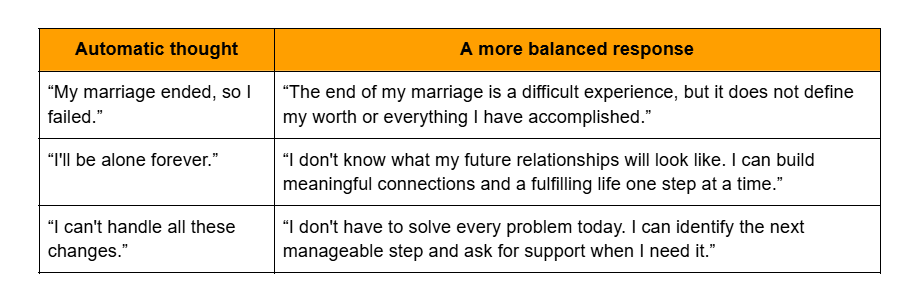
These reframes are not meant to dismiss grief or force positive thinking. They help you separate painful feelings from conclusions that may be unfair or inaccurate.
A CBT-based divorce coach can also help you practice skills such as identifying triggers, reducing unhelpful self-talk, and approaching difficult conversations with greater awareness.
How to Choose a Divorce Coach in Columbus
To find the right divorce coach in Columbus, begin with understanding their qualifications, approach, and how they will support your specific circumstances.
Before committing, consider the following:
- Training and certification: Ask about coaching credentials, relevant training, and experience supporting people through major life transitions. There is no universal license for divorce coaches.
- Coaching approach: Find out if sessions involve structured goals, practical exercises, communication skills, or CBT-based techniques.
- Cost and scheduling: Ask about session fees, package requirements, cancellation policies, and online availability.
- First-session expectations: A useful introductory conversation should cover your current challenges, goals, and what coaching can realistically address.
- Professional boundaries: A trustworthy coach should be clear about when legal advice or mental-health treatment is necessary.
Questions worth asking include:
- How have you helped clients navigate divorce-related life changes?
- What would we work on during the first few sessions?
- How do you measure progress?
- What happens if I need support outside your professional scope?
If you're considering a divorce coach in Ohio, virtual coaching can also make scheduling easier when you're balancing work, family responsibilities, and legal appointments.
Also Read: How to Know If You Need a Life Coach (And What to Expect)
Divorce Coaching at Reclaim Happy
Divorce can leave you feeling like every part of your life is changing at once. At Reclaim Happy, we help you find manageable starting points, understand the thought patterns behind difficult emotions, and build confidence as you adjust to what comes next.
As CBT-certified life coaches, we bring practical, individualized support to the challenges that often accompany separation and divorce.
Here's how we can support you:
- Rebuild confidence and self-worth: Challenge self-blame and negative beliefs that can develop during a difficult separation.
- Strengthen boundaries and communication: Practice expressing your needs and handling challenging interactions with greater confidence.
- Manage stress and emotional reactions: Use CBT-based tools and mindfulness practices to respond to difficult moments.
- Create structure during uncertainty: Set realistic goals, establish healthier routines, and identify practical next steps.
- Move forward at your own pace: Work on the challenges that matter most to you, with strategies you can practice between sessions.
Our sessions are available remotely throughout the US.
You don't need to have a complete plan for life after divorce. We can help you begin with the decisions, habits, and concerns that are affecting you today.
Book your free consultation with Reclaim Happy and take the first step toward rebuilding your confidence and direction after divorce.
FAQs
What does a divorce coach do?
A divorce coach helps people manage personal challenges before, during, and after divorce. This can include setting boundaries, preparing for difficult conversations, managing stress, rebuilding confidence, and establishing new routines. Coaching is generally goal-oriented and focuses on practical skills you can apply in everyday life.
Is a divorce coach the same as a therapist?
No, a divorce coach is not the same as a therapist. A coach helps with personal goals, communication, coping habits, and life transitions. A licensed therapist can assess and treat mental-health conditions, including severe depression, trauma, and anxiety disorders. The appropriate choice depends on your needs, and some people benefit from both.
Is a divorce coach worth it?
A divorce coach can be worth it if you're struggling to make decisions, maintain boundaries, or adjust to everyday life during separation. The value depends on your goals, the coach's qualifications, and how well their approach fits your situation. An introductory consultation can help you decide if the support is appropriate.
How much does a divorce coach cost in Ohio?
The cost of a divorce coach in Ohio varies depending on experience, session length, and package structure. Some coaches charge per session, while others require multi-session commitments. At Reclaim Happy, you can book the first consulatation completely free. After that, our CBT-based life coaching sessions cost $75 each, with no cancellation fees. Your coaching sessions may also qualify for HSA reimbursement, depending on your eligibility and applicable requirements.
Can I see a divorce coach and a therapist at the same time?
Yes, you can work with a divorce coach and a therapist at the same time. Your therapist can address clinical mental-health concerns, while your coach helps you practice communication skills, establish routines, and work toward personal goals. Keeping each professional informed about their respective roles can help avoid confusion.
Can a divorce coach give legal advice?
No, a divorce coach cannot provide legal advice unless they are also appropriately qualified and authorized to practice law. Questions about property division, custody, support obligations, and legal rights should go to a qualified attorney. A coach can help you organize questions and prepare for conversations with your legal team.